Author: WalkMassachusetts

Walking Toward Safer, Healthier Streets in Brockton

Walking Toward Safer, Healthier Streets in Brockton

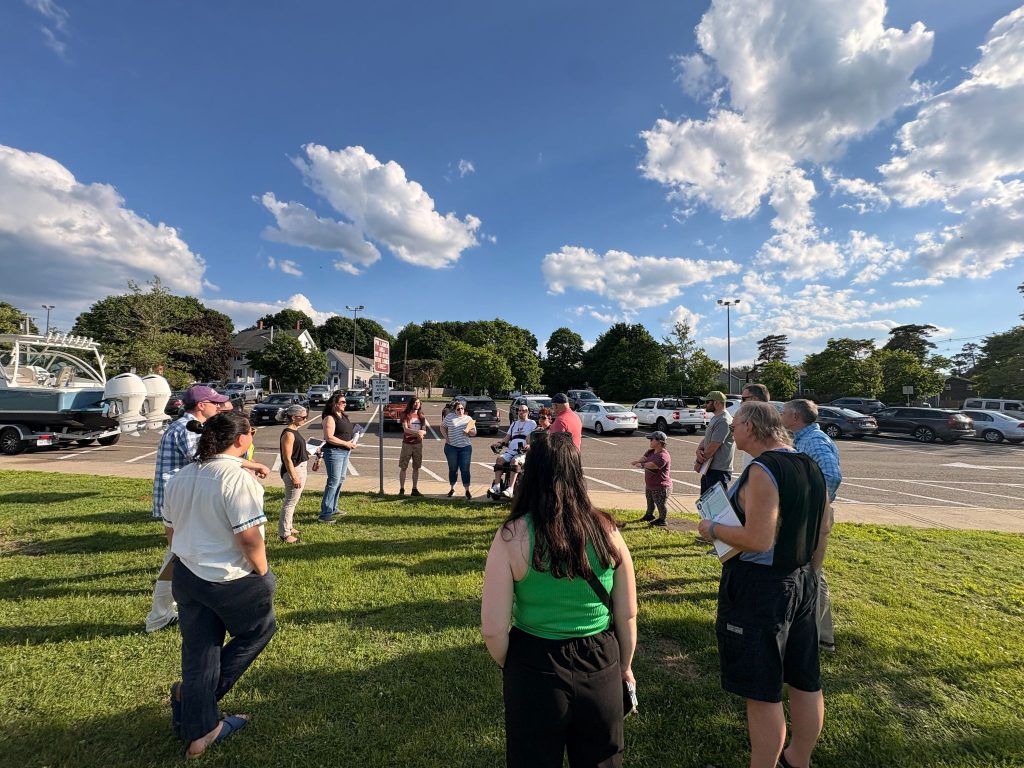
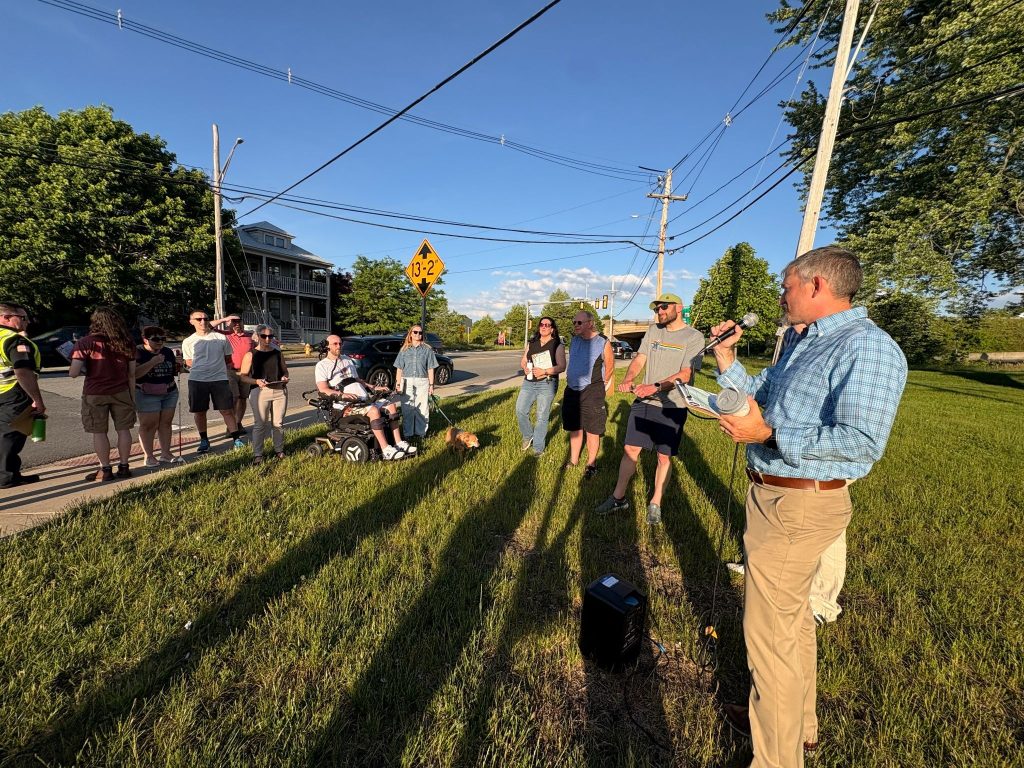
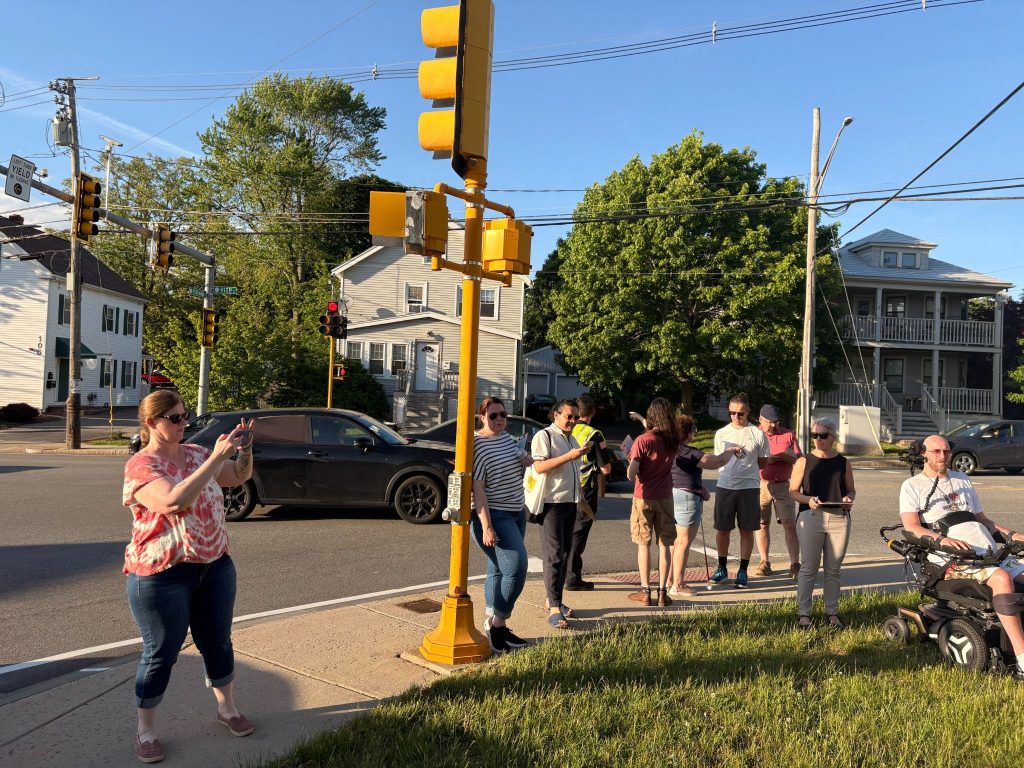
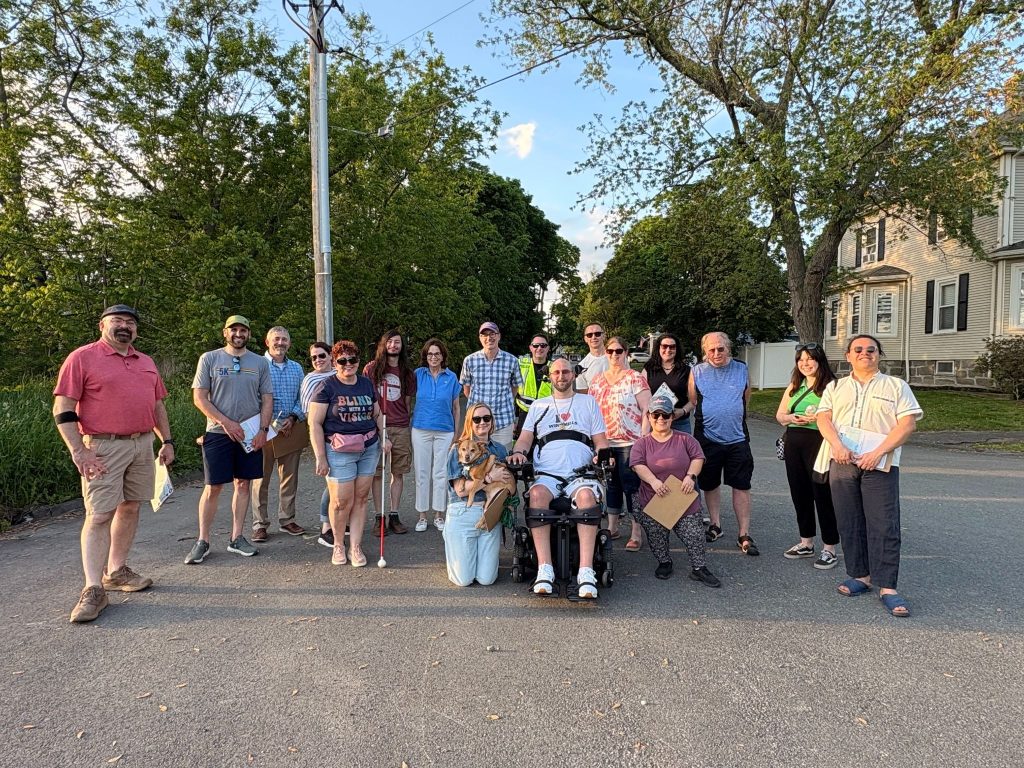
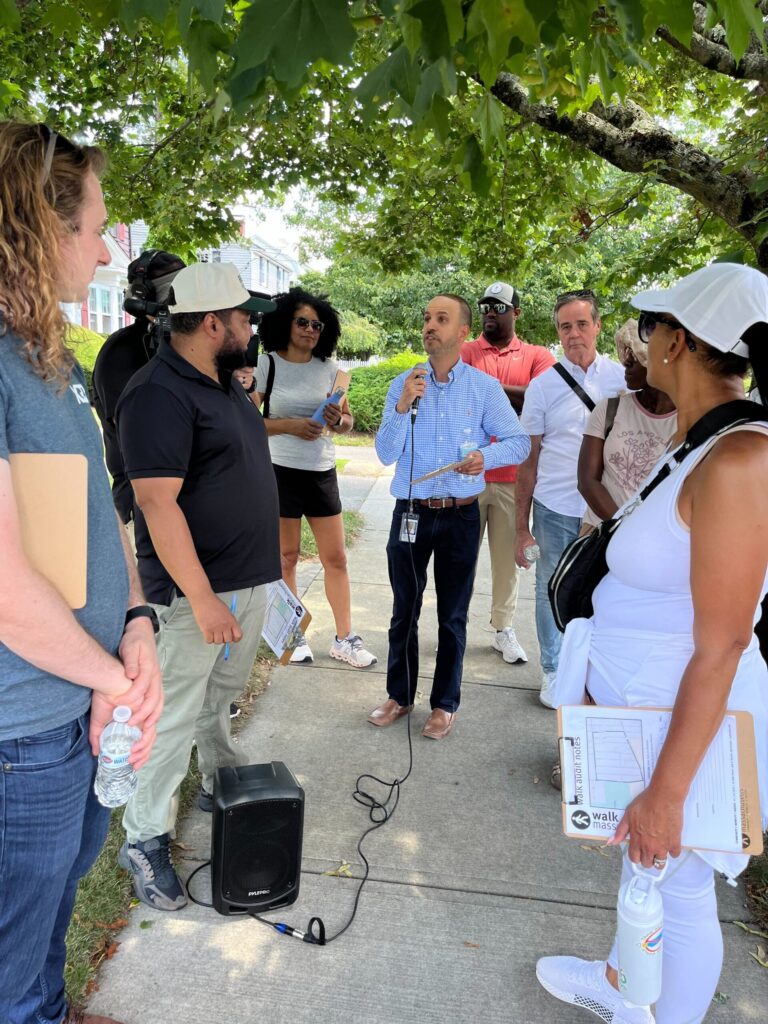
This summer, WalkMassachusetts and Old Colony Planning Council partnered with community members to complete a series of walk audits across four Brockton neighborhoods: Campello, Montello, East Side, and West Side. Each audit brought together residents, local leaders, and advocates to identify barriers, share personal experiences, and recommend solutions to make walking safer, more accessible, and more enjoyable for everyone.

Why Walk Audits Matter

A walk audit is a hands-on way for community members to assess the safety and comfort of their streets. Participants walk a set route together, observe conditions, and document challenges and opportunities. The result is a community-driven report that highlights both short- and long-term improvements, shaping future investments in infrastructure and public space.


Key Findings from the Brockton Walk Audit Series

Montello (May 21, 2025)

  • Concerns: Faded crosswalks, broken sidewalks, high vehicle speeds, and chronic flooding.
  • Recommendations: Restriping and relocating crosswalks, repairing sidewalks, permanent traffic calming (curb bump-outs), and engineering drainage solutions.
  • Community Insights: Stakeholders highlighted Montello’s strong access to public transportation, but emphasized the need for safer crossings, more shade, and clear wayfinding for pedestrians.

Campello (June 26, 2025)

  • Concerns: Missing bus stop signage, poorly maintained crosswalks, excessive litter, and sparse tree canopy.
    Recommendations: Replace street signs, repaint high-visibility crosswalks, install trash bins, and coordinate street tree planting with the Greening the Gateway Cities Program.
  • Community Insights: Campello’s busy streets and active businesses show promise, but participants noted obstacles like lifted concrete and the need for improvements near Vicente’s Supermarket.

West Side (July 23, 2025)

  • Concerns: Lack of crosswalks to key features like bus stops, overgrown vegetation along sidewalks, litter from car crashes, and limited tree coverage.
    Recommendations: Add more crosswalks at intersections, maintain vegetation regularly, create a public-private waste management partnership with local businesses, and expand shading through tree planting.
  • Community Insights: Residents noted the disparities in walkability between different Brockton neighborhoods. West Elm Street stood out as an example of well-paved sidewalks with space for wheelchairs and strollers—highlighting how streetscape improvements here could be a model for Belmont and Moraine Streets.

East Side (August 14, 2025)

  • Concerns: Short walk signal times, lack of ADA compliance, missing sidewalks, and minimal shading.
  • Recommendations: Lengthen signal times, install ADA-compliant ramps, add raised crosswalks along key locations such as Caffrey Towers and Brockton Hospital. Implement shading systems with trees or sunshades as shopping plazas are developed.
  • Community Insights: Residents shared concerns about accessibility challenges for people with disabilities and older adults. They also pointed to shaded bus stops as a model for what the rest of the neighborhood needs.

Moving Forward

These walk audits show both the strengths and opportunities in Brockton’s neighborhoods. While each area has unique challenges, common themes emerged:

  • The need for safer crossings and clearer street signage.
  • The importance of shade, seating, and trash management to create a more welcoming environment.
  • The opportunity to leverage Brockton’s strong transit access to encourage walking as a safe, reliable option for all.

With community voices at the center, these reports provide a roadmap for improvements that can build healthier, more connected neighborhoods across Brockton.

📑 Explore the full reports here:

Blogpost by Emma Itri, Development and Communication Coordinator

Shared Spaces Tremont Street Site Visit April 2025

Shared Spaces Tremont Street Site Visit April 2025

We are ‘Shared Spaces’, a coalition of advocates from the community, Boston Center for Independent Living (BCIL), Riders’ Transportation Access Group (RTAG), Transportation for Massachusetts (T4MA), WalkMass, Boston Cyclists Union (BCU), and MassBike.

Our mission is to promote collaboration and understanding of the challenges associated with shared spaces – such as bike lanes, sidewalks, crosswalks, and bus stops statewide. We are committed to advocating for safety and accessibility in the design of these shared spaces, with a focus on the unique experiences of individuals with disabilities. Through education, outreach, and active engagement, we will advocate for and support inclusive policies that enhance the safety and accessibility of shared spaces for all people with disabilities, pedestrians, bicyclists, drivers, and transit riders.

We organized this site visit to bring together individuals from the city and provide them with a firsthand understanding of these shared spaces, their limitations, and potential conflicts—this initiative aimed to promote more informed decision-making. Additionally, the visit facilitated relationship-building between our communities, allowing for a more authentic and accurate experience of these shared spaces.

We want to express our gratitude to the participants of this site visit, which included representatives from the MBTA’s System-Wide Accessibility Department, the City of Boston’s Commission for Persons with Disabilities, the City of Boston’s Street Cabinet, the Boston Transportation Department, and the Institute for Human-Centered Design. Thank you for your time, consideration, and efforts to make our streets safer for vulnerable users.

Please find at the link below a summary of the key observations from our group’s site visit of Tremont Street on April 14, 2025. We have included photos and can provide more examples if that is helpful. We recognize that some of our recommendations outline ideal scenarios. However, any improvement to roadway safety benefits all users. If achieving the ideal is not possible, we should still take action. Slowing down all users minimizes harm in case of conflicts.

Read the PDF report

Testimony to joint committee on transportation on S.2379, “An Act relative to providing multimodal transportation technologies” (AVs)

Testimony to joint committee on transportation on S.2379, “An Act relative to providing multimodal transportation technologies” (AVs)

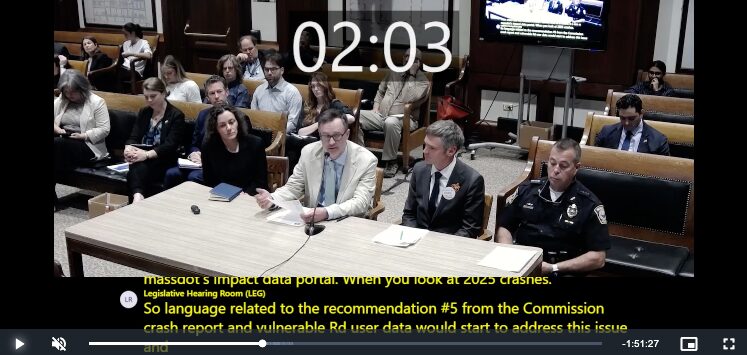
Thank you to Chairs Arciero and Crighton and members of the committee for holding this hearing today. My name is Brendan Kearney and I am the Executive Director at WalkMassachusetts, a statewide pedestrian advocacy organization founded in 1990 as WalkBoston. I’m also sharing comments on S.2379, “An Act relative to providing multimodal transportation technologies,” which would authorize the use of autonomous vehicles in the Commonwealth. 

Separately, I’ll be submitting written testimony against the sidewalk robot bills, H.3773/S.2372 (“An Act relative to mobile carrying devices”), and in favor of Rep. Vitolo’s H3804 to give pedestrians more walk time, and Senator Brownsberger’s S.2343 expanding truck safety requirements. 

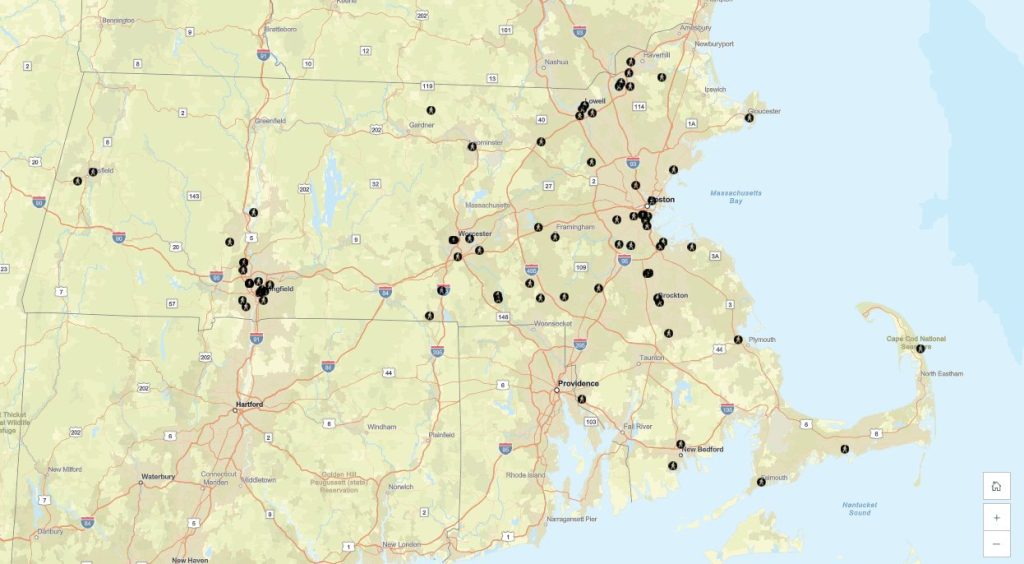
In 2024, there were 369 reported total traffic deaths in Massachusetts. At least 78 pedestrians lost their lives as a result of traffic crashes, accounting for just over 21% of the total. 

It is possible that self-driving vehicle technology may help reduce that number, but there is no guarantee. This must not be rolled out without proper safeguards for our communities.

Since there are many unknowns with autonomous vehicle systems, we caution you to err on the side of more data sharing, local control, and consultation so that MassDOT, regional planning agencies, and local transportation departments will know more about vehicles operating on streets across the Commonwealth, and ensure we’re adapting them to our communities instead of the other way around – and so that municipal staff are able to respond to safety issues and resident concerns. 

Incomplete crash data is a known issue. I encourage you to require data to be collected and shared not only during any testing phases, but also during deployment of autonomous vehicles. Please lean on the team at the MassDOT Safety Division who maintains the IMPACT Crash Portal to get their feedback on what information would be most useful to be collected and shared. 

A few data points AVs could provide beyond traditional crash data might include:

  • When and where vehicles are deployed to potentially understand the weather and road conditions the vehicles are driving in.
  • Close calls. These might include hard braking incidents (when the AV had to suddenly stop), disengagements (when the AV requires a safety driver to take over)  and immobilization (when the vehicle does not have a safety driver and is stuck).

I’ll share two concerns to keep in mind with the software:

  • 1st/ Intentional lawbreaking written into the code. In a Washington Post article in December titled “On roads teeming with robotaxis, crossing the street can be harrowing” their tech columnist in San Francisco captured videos of Waymo self-driving cars failing to stop for him at a crosswalk. He sought to answer the question, “How does an AI learn how to break the law?” A spokesperson for Waymo told him that its car might decide not to stop if adjacent cars don’t yield. “So is it possible that Waymo’s AI is learning from the human drivers on the road who also act like jerks?” One of the theories posited is that Waymo cars were intentionally getting more aggressive to help shed a market reputation for being slower than competitors.
    It is unclear to me how this behavior – violating the law to yield to pedestrians at a crosswalk – should be allowed, or how it would be creating a safer street than human drivers. The intentional lawbreaking that has been on display in California has also included short term parking in crosswalks and bike lanes – not pulling over to pick someone up, but remaining there for upwards of 5-10min. Communities and the state need to be able to collect data on that and have the ability to regulate it to hold companies accountable for these software choices.
  • 2nd/ Bias in the software itself. A study a few years ago from Georgia Tech found that “the facial and body recognition technology built into many pedestrian detection systems does not recognize and react to darker-skinned people as consistently as it does lighter-skinned people.” Already, people of color are disproportionately represented in fatal crashes involving people walking. The technology should level the playing field, not reinforce existing shortcomings and biases.  

Thank you for your time, I appreciate the opportunity to comment. 

This testimony was shared as part of a panel w/ Pete Wilson of Transportation for Massachusetts (T4MA) and Seth Gadbois of Conservation Law Foundation (CLF) at a Joint Committee on Transportation Hearing on June 24, 2025.

Testimony to joint committee on transportation on S.2344 & H.3754 “An Act relative to traffic regulation using road safety cameras”

Testimony to joint committee on transportation on S.2344 & H.3754 “An Act relative to traffic regulation using road safety cameras”

Thank you chairs Crighton and Arciero. My name is Brendan Kearney, and I’m the executive director of WalkMassachusetts, a statewide pedestrian advocacy organization working to make walking safer and easier in Massachusetts, to encourage better health, a cleaner environment, and more vibrant communities, originally established in 1990 as WalkBoston. I’m here alongside colleagues with the MA Vision Zero Coalition, who will speak to different aspects in support of H.3754 & S.2344. 

I want to give some context into some of the problems these safety camera bills are working to help solve. WalkMassachusetts releases a report each spring looking at fatal crashes from the year before. 

  • In 2024, there were 369 reported total traffic deaths in Massachusetts. At least 78 pedestrians lost their lives as a result of traffic crashes, accounting for just over 21% of the total. 
  • Of the 351 cities and towns in Massachusetts, 53 had at least one pedestrian crash death in 2024. 
  • 66.7% fatal pedestrian crashes took place in environmental justice census block groups. 

Environmental justice (EJ) is based on the principle that all people have a right to be protected from environmental hazards and to live in and enjoy a clean and healthful environment. This skewed spatial distribution of fatal pedestrian crashes in Massachusetts demonstrates that EJ communities face disproportionate harm in large part because of historic and present-day injustices in transportation planning, so we need to do more to protect the people that are just trying to get around or cross the street in their town. 

We’re grateful the legislature passed “An Act Creating a Next Generation Roadmap for MA Climate Policy” in 2021, which includes a specific definition of “environmental justice population” to ensure Massachusetts holds to this commitment no matter what is happening at the national level. 

Each year we’ve released this report, we believe that on the state and local level, there is a need for more action to slow drivers down so people trying to cross the street can do so safely. Drivers can more easily see and yield to people in crosswalks when driving slower. 

We were very glad that MassDOT Highway Administrator Gulliver testified earlier. 

MassDOT believes the need to slow people down to reasonable speeds as well – they now have an entire page of their website dedicated to Speed Management

In addition, the MassDOT Strategic Highway Safety Plan includes as one of six initiatives an effort to Accelerate Research and Adoption of Technology

“The Commonwealth is eager to support research and the use of technologies to reduce roadway deaths and serious injuries. As part of this work, Massachusetts will identify barriers to adoption, as well as the statutory and regulatory changes needed.”  

They specifically mention cameras for red light running, speed zones, and work zones. They cite that  “Automated speed enforcement can reduce fatal and serious injury crashes by 11% to 44% and reduce the proportion of  speeding drivers by 14% to 65%.” 

The governor’s budget bill also included safety cameras, so we hope this committee will move the safety camera bills in front of you along favorably. 

Thank you. 

This testimony was shared as part of a panel w/ Pete Wilson of Transportation for Massachusetts (T4MA), Galen Mook of MassBike, and Emily Stein of Safe Roads Alliance at a Joint Committee on Transportation Hearing on June 3, 2025.

Introducing new board members

Introducing new board members

We’ve added new board members who bring valuable skills to the organization: Bill Decker, Rick Plenge, Tanya Roy.

Bill Decker, board member
William Decker
Bill Decker has been a senior human resources executive for 40 years, providing HR solutions to businesses in multiple industries at all phases of their life cycle. He has specific expertise in organizational restructuring and change management, executive compensation, talent strategy, acquisition/retention, leadership and succession planning. He currently serves as Senior Human Resources Executive for Odyssey Systems in Wakefield, Mass. A Boston resident who enjoys the freedom and opportunity to walk instead of driving whenever possible, Bill joined the WalkMassachusetts board in June 2025. He was compelled by the organization’s commitment to providing the environment and infrastructure where people of all ages can safely and comfortably to walk or bike on the streets throughout our communities.
Rick Plenge, board member
Rick Plenge
Rick Plenge is an avid walker and promoter of safe and accessible pedestrian facilities through his work as the New England Active Transportation Service Leader with VHB in Boston. He has worked across North America observing, planning and designing multimodal facilities and is excited to leverage his lived experiences in supporting the vision and values of WalkMassachusetts. He continues to evolve his understanding of emerging pedestrian safety and accessibility best practices through his work on the Transportation Research Board Pedestrian and Bicycle Committees as well as through his role as a National Complete Streets Instructor. He lives in Beverly with wife and three dogs and takes pride in being a consistent top finisher in Beat the Bay State Challenge.
Tanya Roy, board member
Tanya Roy
Tanya Roy spent her professional career in investments before transitioning to the nonprofit sector, where she applies her financial and management background to mission-driven organizations. She served on the board as treasurer of the Wellesley College Students’ Aid Society, which provides financial support to in-need students. She currently serves as treasurer and board member of the League of Women Voters of Massachusetts, advancing initiatives in voter rights, civic engagement and advocacy. A passionate walker, cyclist, swimmer and runner, Tanya’s involvement with WalkMassachusetts combines her active lifestyle with an organization whose mission she deeply values. Tanya holds a B.A. from Wellesley College and an M.B.A. from the Kellogg School of Management at Northwestern University.

We’d also like to thank you to our board members who rotated off the board at the end of their term this June: Paula Gold, Emma Rothfeld Yashar, Carol Steinberg.