Tag: sidewalks

BOSTON METRO AREA RANKED LEAST DANGEROUS IN THE NATION IN SAFETY FOR PEDESTRIANS

BOSTON METRO AREA RANKED LEAST DANGEROUS IN THE NATION IN SAFETY FOR PEDESTRIANS

FOR IMMEDIATE RELEASE 

May 20, 2014                                                                                               

CONTACT:

Michelle Blundell, 202.478.6176

mblundell@mrss.com

Wendy Landman, 617.367.9255

wlandman@walkboston.org

BOSTON METRO AREA RANKED LEAST DANGEROUS IN THE NATION IN SAFETY FOR PEDESTRIANS

Older adults, children most threatened by streets built for speed, not safety

BOSTON, MA – Boston is among the safest in the nation for pedestrians, ranking 1st out of the 51 largest metro areas, a new report released by the National Complete Streets Coalition, a program of Smart Growth America, said.

While many streets across the country are perilous for people walking, hundreds of communities, like the City of Boston and a number of Boston area municipalities, are working to make their streets safe and welcoming for people on foot. In recent years, scores of communities have begun to redesign roads as “complete streets,” adding sidewalks and bicycle lanes, reducing crossing distances and improving crosswalks. Such design features have helped make walking safe and comfortable for everyone.

Pedestrian safety is not only important for the lives it saves and injuries it prevents, but it also promotes vibrant businesses, attracts tourists, reduces pollution and allows for healthier communities with increased physical activity.

Though the report found that Greater Boston is safer when compared to other metros across the country, 476 pedestrians were killed from 2003 to 2012 — an unacceptable number no matter Boston’s ranking. Continuing to invest resources in making our streets safe for all users is key to ending these preventable deaths.

In addition to ranking America’s major metropolitan areas according to a Pedestrian Danger Index to assess how safe pedestrians are while walking, the report, Dangerous by Design presents data on pedestrian fatalities and injuries in every U.S. metro area, state, and county. The report also includes an online, interactive map showing the locations where people walking have been fatally struck by the driver of a vehicle.

“While we should celebrate our good ranking, we must remember that the last decade has seen 476 pedestrians killed on Boston area roads, which represents almost 20 percent of all traffic fatalities,” said Wendy Landman, Executive Director of WalkBoston. “Almost 7,000 pedestrians were injured during that same period, and 34 child pedestrians died in Massachusetts from 2003 – 2010. These numbers keep us focused on a future where our streets are safe for everyone.”

These are all preventable tragedies. WalkBoston continues to work hard with state, municipal and neighborhood partners to make our streets and sidewalks safe for all walkers. WalkBoston will soon begin a new safety initiative with the Massachusetts Department of Transportation to increase traffic safety in 12 pilot communities (Brockton, Cambridge, Fall River, Haverhill, Lynn, New Bedford, Newton, Pittsfield, Quincy, Salem, Somerville and Watertown). WalkBoston is currently working with the Boston Public Schools on improving walking conditions between middle schools and nearby transit and bus stops.

The majority of pedestrian deaths occur on roadways that are dangerous by design —engineered and operated for speeding traffic with little to no provision for the safety of people walking, biking or using public transit. Sadly, older adults, children and minorities are the most at risk while walking, dying in disproportionate numbers.

“Our hardest work lies ahead in places like Blue Hill Avenue in Dorchester and Mattapan and Cambridge Street in Allston where wide streets and fast-moving cars make it less safe and less attractive for walkers,” said Landman. “By way of contrast, just ask a restaurant owner in the North End whether its attractive and safe walking environment fuels their business.”

Pedestrian safety is often perceived as a strictly local issue but, for decades, federal dollars have been invested in thousands of miles of state and local roads in the heart of communities. In fact, 68 percent of all pedestrian fatalities over the past decade occurred on federal-aid roads — roads that follow federal guidelines and are eligible to receive federal funds.

“We are allowing an epidemic of pedestrian fatalities, brought on by streets designed for speed and not safety, to take nearly 5,000 lives a year; a number that increased six percent between 2011 and 2012,” said Roger Millar, Director of the National Complete Streets Coalition. “Not only is that number simply too high, but these deaths are easily prevented through policy, design, and practice.  State and local transportation leaders need to prioritize the implementation of Complete Streets policies to improve safety for people walking.”

The federal government sets the tone for a national approach to safety, and Congress can address this critical issue by passing the Safe Streets Act as it renews the transportation law. State governments and agencies also can take a number of actions to improve pedestrian safety, starting with adopting a strong Complete Streets policy and following a comprehensive action plan to ensure the streets are planned and designed for the safety and comfort of people walking.

We look forward to the day when our services are no longer in high demand. We aren’t there yet. So, lets celebrate our accomplishments but remain dedicated to a future of complete streets and safety for all.

To view the full report, please click here.

###

­­­­­About The National Complete Streets Coalition
The National Complete Streets Coalition, a program of Smart Growth America, seeks to fundamentally transform the look, feel and function of the roads and streets in our community, by changing the way most roads are planned, designed and constructed. Complete Streets policies direct transportation planners and engineers to consistently plan and design streets with all users in mind.

About Smart Growth America
Smart Growth America is the only national organization dedicated to researching, advocating for and leading coalitions to bring better development to more communities nationwide. From providing more sidewalks to ensuring more homes are built near public transportation or that productive farms remain a part of our communities, smart growth helps make sure people across the nation can live in great neighborhoods.

About WalkBoston
WalkBoston makes walking safer and easier in Massachusetts to encourage better health, a cleaner environment and vibrant communities. Our work in 101 Massachusetts cities and towns has helped put walking on the agenda.
Beacon Street Multimodal Improvements Comment Letter-Somerville, MA

Beacon Street Multimodal Improvements Comment Letter-Somerville, MA

May 13, 2014

Richard K. Sullivan, Jr.
Executive Office of Energy and Environmental Affairs
Attn: Alex Strysky
100 Cambridge St., Suite 900
Boston MA 02114

Mark Kolonoski
MassDOT Highway Division
Environmental Services Section
10 Park Plaza, Room 4260
Boston, MA 02116

RE: Comments on the Environmental Notification Form for the Beacon Street Multimodal Improvements and Streetscape Enhancement in Somerville, MA

Dear Secretary Sullivan and Mr. Kolonoski:

The Beacon Street project area extends from the bridge abutment at Oxford Street to Dickinson Street, a distance of approximately 1.1 miles. The project is intended to enhance pedestrian and bicycle movements with improved streetscape, wider sidewalks, a new cycle track/bicycle lanes, and new ADA compliant curb ramps. The project goal is to enhance the multimodal connectivity of the Beacon Street Corridor.

We have reviewed this project and offer the following comments:

1. Updated and continuous sidewalks on Beacon Street
The program for complete streets along Beacon Street will result in new cycle tracks and a significant reconstruction of both the street and the sidewalk. Sidewalks are to be updated and rebuilt to correct current deficiencies, including substandard slopes and lack of ramps at intersections. A sidewalk will be added to the south side of Beacon Street in a location where no sidewalk now exists. Adherence to this plan is essential for the safety and convenience of all users of the sidewalk.

The proposed sidewalks will replace the existing 10’-11’ wide sidewalks with new ones of substantially the same width. Retention of this dimension as a minimum is extremely important because some space within the sidewalk will accommodate other uses, such as trees. In only one portion of Beacon Street, where there are space constraints due to an existing stonewall, will the 10’-11’ width be precluded; we note
that no trees are planned for the sidewalk in this section.

2. Cycle tracks and bike lanes
Cycle tracks are proposed between Oxford Street and Museum Street, bike lanes between Museum Street and Park/Scott Streets, cycle tracks between Park/Scott Streets and Washington Street and bike lanes between Washington Street and the Cambridge City line. On the north side of the street, the alignments of the cycle tracks and bike lanes are end-to-end, resulting in a virtually straight path for the full length of
the project.

On the south side of the street the cycle tracks and bike lanes do not quite line up. The transitions between cycle tracks and bike lanes at the intersection of Beacon Street/Museum Street and Park Street/Washington Street are angled to accommodate the needed connections between cycle tracks and bike lanes. These intersections have crosswalks where pedestrians will cross near the bike routes. Since separate traffic signals for bicycles are not included in the project, WalkBoston is concerned that walkers may not be aware that bicycles are approaching at these intersections and need to be especially careful because these diversions might distract the cyclists or the
motorists. We request that special signage and/or pavement markings be provided to alert walkers, bicyclists and drivers of these shifts in alignment and the need to be aware of movements by others.

3. Separation of cycle tracks and sidewalks
In several locations, the proposed cycle tracks are immediately adjacent and at the same grade as the sidewalk. In effect the cycle track will be located on an extension of the sidewalk. A pronounced and clear separation between bicyclists and walkers is needed to deter cyclists from using the sidewalk to bypass slower moving bikes. The
starting and stopping of cycle tracks and bike lanes may be confusing and lead to cyclists using the sidewalks to avoid merging into traffic or worrying about people opening car doors directly in front of them.

Since all 208 of the street trees included this project are to be planted within the width of the sidewalk, we assume that they will help to separate the cycle track from walkers. Other street furniture such as the existing utility and lighting poles, or new benches, trash containers, bollards or signs might also help. The precise location of each element should be carefully considered, as they have the potential to interfere with pedestrian or bicycle movements.

4. Placement of trees
Although the sidewalks are 10 feet wide in nearly all locations along Beacon Street, some of that width – perhaps up to 5 feet – will be lost due to the planting of 208 trees directly in the sidewalk. All of the proposed new trees should be placed in long narrow tree pits (we have seen tree pits that are 2’ wide by 6’-8’ long). More typical 4-foot square tree pits that intrude into the sidewalk should not be used. Irrespective of the shape of the tree pit, tree grates and or special permeable but sturdy filler (similar to that used in some South End locations) should be explored. This is important for the safety of walkers, as is the long-term maintenance of the tree pits so that they do not pose tripping hazards for walkers or for the visually-impaired.

5. Traffic signals at crosswalks and mid-block
New traffic signal equipment and signal timing at the intersections of Beacon Street with Park/Scott and Washington Streets are planned. In addition, two High-Intensity Activated crossWalK (HAWK) pedestrian signals on mast arms are planned for pedestrian crossings at the Sacramento Street intersection and at the Buckingham/Cooney intersection. The project thus appears to have signals of some sort at intervals of about ¼ mile; however, in the portion of Beacon Street between Sacramento Street and the rail overpass at Somerville Avenue, the intersections with Oxford and Prentiss Streets have no traffic signals. With no signals to slow traffic these mid-block crossings may be difficult for pedestrians. Signage or other warnings may be essential to inform drivers and cyclists of the crosswalks.

6. Crosswalk paving
The proposed use of concrete pavers at crosswalks has been cited by one of our members as a hazard for nearly all walkers, and we agree. For all crosswalks on Beacon Street, the customary white reflective thermoplastic strips should be used. Pavers have low visibility and are uneven, making it harder for wheelchairs, seniors, and people pushing strollers or grocery carts.

7. Pedestrian signal phasing
At existing signal locations the exclusive pedestrian phase will be replaced with concurrent pedestrian phasing. For all new signals, a leading pedestrian interval (LPI) is proposed to allow pedestrians to enter the crosswalk before vehicles approaching the intersection have a green signal indication. It will be important to coordinate the LPI at each signalized intersection with any preferential treatment given to bicycles at the same location, to avoid potential conflicts.

8. Signage
There is a need for sidewalk and cycle track signs that make it clear to walkers, bicyclists and drivers how the cycle tracks function. In particular, since all the street’s users will be unfamiliar with cycle tracks it will be important to let pedestrians know what to expect in bicycle movements adjacent to them. Signs should advise bicycles to stay within the cycle tracks and avoid using the sidewalks. Signs should advise walkers of approaching bicycle traffic,places to wait before crossing the street, and to not walk in the cycle tracks. Specific notice should be given to cyclists and pedestrians of potential conflicts at intersections, where turning bicycles, vehicles and pedestrians present many different movements.

9. Lighting
New street lighting has not been proposed, and cyclists may be ‘invisible’ to walkers and drivers. The City should explore the need for additional lighting, especially at intersections where so many different movements will be taking place. In addition, as part of the introduction of the cycle track, the City should explore the opportunity to market and enforce state laws requiring bicycles to carry white front lights on bicycles visible that are visible from 500 feet. WalkBoston has received comments from a number of our older members that they find it impossible to see bicyclists approaching at night if they do not use head lights, and with the addition of a sidewalk level cycle track they are very nervous about crossing the track at intersections.

10. Driveways
A great number of private driveways will be accommodated with this design, with each rebuilt to cross both sidewalk and bicycle facilities. The north side of the street has 43 driveways and the south side has 30. Most of the driveways are narrow, and will involve drivers who will back out to reach Beacon Street. Drivers backing vehicles into the street may have obstructions that limit abilities to see approaching walkers, runners or cyclists.

11. Speed control
Speeds on local streets that are primarily residential such as Beacon Street should be strictly regulated. The current 30-mph limit should not be raised. It should be made lower with advisory signs if possible. Reminder signs should be posted at intervals along the route to warn drivers not to go faster.

Thank you for the opportunity to comment on this project. Please feel free to contact us if you should have questions.

Sincerely,

Wendy Landman
Executive Director

Robert Sloane
Senior Planner

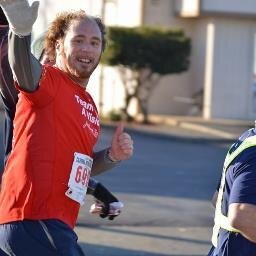
Blind man walking (and running)!

Blind man walking (and running)!

image

Kyle Robidoux is the Director of  Volunteer & Support Group Services at the Mass. Assoc. for the Blind & Visually Impaired.

I walk everywhere. As a marathoner, I also run all throughout Boston and neighboring cities.

I’m also legally blind so walking, along with public  transit, is my main mode of transportation. Therefore,  walkability is very important to me and my family.

The walkability of the city and its public infrastructure impacts me every day. It impacts where I walk, how quickly I can get to where I need to be, and most importantly how safely I can get there.

As someone with low vision (I have very restricted central vision, similar to looking through a toilet paper roll), I rely on sidewalks, curb cuts and ramps, and crosswalks to get me safely to where I need to be. I use a white cane most of the time so the quality of sidewalks and streets is very important.

Brick sidewalks are one of the most unfriendly surfaces for me and most folks with limited mobility (I assume most sighted walkers, too). My cane tip frequently gets stuck in a missing brick or I trip because of the unevenness of the sidewalk. Old (some say historic) sidewalks are very common in the South End, where I spend a good majority of my time. If I have a choice, I will avoid going down a street if I know it has terrible brick sidewalks. I’m thankful that the city has set a new policy limiting the amount of brick in the walk path when repairing/installing new sidewalks.

As my eyesight decreases, I am becoming more reliant on audible street crossings. Otherwise, I have to ask someone to help me find the push button. It would be wonderful if more street crossings had regular intervals in which to cross or a “walk signal” triggered by a sensor on the closest curb ramp.

My relationship to the built environment in my neighborhood plays a large factor as my eyesight decreases, especially during the winter. Trying to navigate unshoveled sidewalks and curb cuts blocked by snowbanks is physically and mentally exhausting. I walk my daughter to school along the South Bay Harbor Trail. Sections of the trail were not plowed this winter days after a snowstorm. Some days my daughter and I, along with other students, were forced to walk in the street because the unplowed path was too difficult to walk.

As our communities continue to develop, I hope less time and energy is spent on talking about parking and traffic and more on creating accessible public spaces.

Creating accessible spaces is not only good public policy but will also ensure that they flourish and reach their greatest potential.

This article was featured in our Spring 2014 newsletter. See the full newsletter & past editions here.

——————————————————————————————————————-
Join our Mailing List to keep up to date on advocacy issues.

Like our work? Support WalkBoston – Donate Now!
Connect with us on Twitter and Facebook

Beacon Street Multimodal Improvements and Streetscape Enhancement Comment Letter

Beacon Street Multimodal Improvements and Streetscape Enhancement Comment Letter

The Beacon Street project area extends from the bridge abutment at Oxford Street to Dickinson Street, a distance of approximately 1.1 miles. The project is intended to enhance pedestrian and bicycle movements with improved streetscape, wider sidewalks, a new cycle track/bicycle lanes, and new ADA compliant curb ramps. The project goal is to enhance the multimodal connectivity of the Beacon Street Corridor.

Read the full letter here:
WalkBoston-CommentENF-BeaconSt-Somerville

Comments on Plans for the Connect Historic Boston project

Comments on Plans for the Connect Historic Boston project

March 12, 2014

William R. Egan, PE
Chief Civil Engineer
Boston Department of Public Works
Boston City Hall, Room 714
Boston MA 02201

RE: Comments on the current plans for the Connect Historic Boston project

Dear Mr. Egan:

WalkBoston has reviewed the most recent plans for the four projects within the Connect Historic Boston program – Commercial Street, Union Street (and the Blackstone Block), Joy Street and Causeway Street). We offer the comments below.

Commercial Street
Of the four projects, we feel that this project does not seriously affect walkers. The Commercial Street project has been carefully designed to incorporate cycle tracks into the existing street layout without affecting pedestrian access or sidewalk availability. We note that the current design provides visual and physical separation between bicycles and pedestrians along the new cycle track/sidewalk proposed on the harbor side of Commercial Street.

Union Street/Blackstone Block
The proposed improvements on Union Street appear excessively vehicle oriented. The proposed sidewalk along the Blackstone Block side of Union Street is intended to encourage pedestrianism and sidewalk cafes, but does not appear to have enough space to accomplish both goals. Thus pedestrians will be walking in the raised street with vehicles. This suggests the need for a very low speed limit on this block (5-10 mph).

The space being devoted to parking could be incorporated into the raised and combined street/sidewalk and used only by pedestrians. Movement by vehicles would not be impeded by enlarging the area intended for pedestrians. One lane should be sufficient for the vehicles that would use this street in the future, and would serve emergency vehicles, and not general traffic. Loading for adjacent businesses might be accommodated in a time-based method, such as that used in the Downtown Crossing shared streets – Washington, Winter and Summer.

The sharing of Union Street between vehicles and pedestrians should be reflected in signage. The shared street area should be signed as a ‘Shared Street” at the entrance to the street with a speed limit of 5-10 mph. Drivers are not being deprived of movement through the area, because they have an alternative parallel street – Congress Street – which is very close. The speed limit should also reflect that this area, bounded by historic buildings and a park, is a prime tourist district, where walkers may not be aware that vehicles are likely to be alongside as they walk from the park to Union Street businesses.

Joy Street
Joy Street is also to become a shared street, with the street raised to sidewalk level. Streetsharing by vehicles and pedestrians requires appropriate signage at the entrance to this street, such as a ‘Shared Street” sign with an accompanying speed limit of 5-10 mph. This is especially important in this densely settled residential area, where Joy Street is often used as a vehicular cut-through street from Beacon Street to Cambridge Street.

Causeway Street
Raised street crossings for pedestrians at the intersections of Canal and Haverhill Streets had long been a part of the planning. We think that their removal is a serious mistake for pedestrian safety. Thus, we offer other suggestions that might be incorporated into the plan to improve safety for walkers. These include:

  •  A right turn lane at Canal and Causeway Streets
    The potential for drivers leaving Canal Street northbound and turning left onto Canal Street appears difficult to resolve. To avoid this issue, 3” bumps in the center of the Intersection of Canal and Causeway have been proposed. We feel these bumps are potential tripping hazards for the walkers who will surge across this intersection during morning and evening commuter rail commuting times and before and after major events at the TD Garden. In large groups of people, many will simply not see the bumps and may fall on encountering them.

Another way to prevent left turns is to change the street geometry. A very tight, single lane right turn lane could be provided to direct northbound traffic onto Causeway Street. A bulbout on the west side of the Canal Street intersection where it meets the sidewalk could divert all vehicles to the right, and could include a rollover curb to permit fire engines to make the left turn in emergencies.


  •  Level crossing on sidewalks on each of the side streets
    All of the side street pedestrian crossings along Causeway should be raised to sidewalk level at the entrance to intersections. This would help to reduce speeds and assist in warning drivers to make only safe and permitted movements. A level crossing could be combined with the right turn lane suggested for the Canal Street crossing.


  • Canal Street intersection striped from corner to corner
    The volume of pedestrians crossing the Canal Street intersection is one of the largest in the city. Surge traffic from commuters and the attendees of TD Garden events suggests that the intersection needs significant protection for pedestrians. We urge the painting of the entire intersection (curb-to-curb in both directions) to indicate that pedestrians may cross safely anywhere within the intersection. Within this ultra-wide zebra crossing, a modification could be made by painting with a different color the route of the cycle track within the intersection.


  • Elimination of right turn on red at all Causeway Street intersections
    It is appropriate to have vehicular traffic in all directions stopped to permit walkers to cross safely and to prohibit any kinds of turning movements that might infringe on walking movements. For example, at Canal Street, forbidding right turns during pedestrian crossing cycles would help protect walkers.


  • Wider crosswalk between T station entrances on Haverhill Street
    The crosswalks on Causeway Street at Haverhill Street connect directly on both ends to subway access points. This crosswalk has the potential of attracting numerous pedestrians. The crosswalks should be enlarged beyond the standard widths to accommodate surge flows. • Cobble warnings Cobbles or other rough paving should be placed on the approaches to both the Canal Street intersection and the Haverhill Street intersection to warn drivers of pedestrian concentrations ahead. The cobble warnings should be supplemented with signs indicating that pedestrian crossings are ahead.


  • 20 mph speed zone
    The frontage along Causeway Street is about to become even more intensely used than at present. In addition to the rail commuters and event attendees, a very large development with millions of square feet and many new residents and workers is to be placed between the Garden and the front of the property. This intensely developed area will increase the pedestrian concentration at all intersections, but principally at the Canal Street crossing. Because of the many modes of transportation and the concentration of pedestrians at this location, the speed limit should be made a cautious 20 mph on Causeway Street for the safety of all.

We appreciate your consideration of our comments and look forward to your responses to them. Please feel free to contact WalkBoston with questions you may have.

Sincerely,

Robert Sloane
Senior Project Manager